News

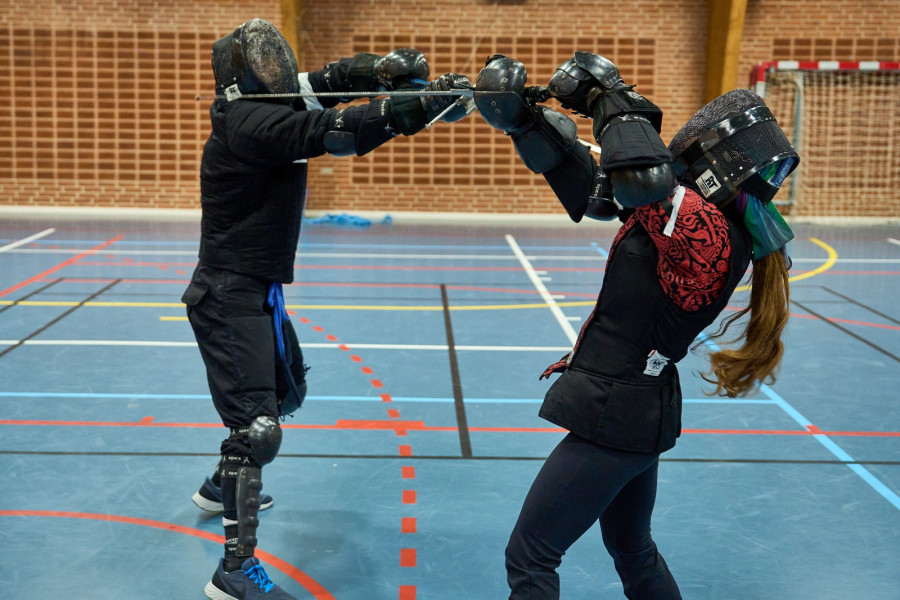
A pilot event in European Historical Fencing
Competition
Kalundborg to host the “Unofficial European Championships”
We are pleased to inform our community that from February 1st to 2nd, 2025, the city of Kalundborg, Denmark, will host the 1st Unofficial European Historical Fencing Championships! This landmark event, a pioneering proof of concept, will bring together historical fencing enthusiasts and skilled practitioners from across Europe, creating an incredible opportunity to celebrate and compete in the ancient arts of swordsmanship in a venue filled with rich historical heritage.
A Perfect Venue for Historical Fencing
Kalundborg is steeped in history, making it a fitting location for this inaugural event. Just steps away from the venue lies the city's old center, featuring the remarkable five-towered Church of Our Lady, dating back to 1170. The venue itself stands on the remnants of Kalundborg’s ancient castle, adding a historical touch to the atmosphere of the competition.
Under the Auspices of the European Fencing Confederation
While this championship is not officially recognized by the European Fencing Confederation (EFC) as part of their regular European Championship roster, the confederation supports this first pilot to further study displaying new aspects of fencing. The efforts are driven by former EFC President Giorgio Scarso and the Italian Fencing Federation alonsgide the Danish Fencing Federation. This initiative is considered a proof of concept to demonstrate how historical fencing could be aligned with olympic fencing.
Developing Competitive Historical Fencing
This championship serves as a vital step in the development of competitive historical fencing while maintaining a strong emphasis on the historical manuals that form the foundation of the sport. The integration of competition and historical authenticity ensures that participants engage with the discipline both as a sport and a cultural heritage practice. By aligning the values of historical research with modern sportsmanship, this event seeks to establish a sustainable framework for the future of Historical European Martial Arts. Notice that we use the word “historical fencing” and not “HEMA-fencing” in our invitation, which narrows the definition of what we are talking about.
Strengthening the Historical Fencing Community
The aim of this championship is not only to showcase the incredible skills of historical fencers but also to unite the European HEMA community in a shared celebration of tradition, technique, and camaraderie. Historical European Martial Arts (HEMA) encompasses a wide range of disciplines, and the selected categories for this competition—Sword and Buckler, Long Sword, Military Sabre, and Rapier and Dagger—represent only a fraction of the possibilities within the sport. This event sets the stage for a new era of historical fencing, promoting unity and growth within the sport.
Championship Schedule
The event will feature competitions in four main categories: Sword and Buckler, Long Sword, Military Sabre, and Rapier and Dagger. Here’s a glimpse of the schedule:
Friday, January 31:
-
15:00–16:00: Meeting of the Directoire Technique
-
16:30–18:30: Initial Weapon Control and Accreditation
-
20:00–21:00: Meeting of Referee Delegates and Main Referees
Saturday, February 1:
-
07:30–08:30: Weapon Control (Sword and Buckler, Long Sword)
-
09:30–11:30: Poules Matches (Sword and Buckler, Long Sword)
-
12:30–16:30: Elimination Matches
-
16:30–17:00: Opening Ceremony
-
17:00–18:00: Semifinals
-
18:00–18:30: Finals
-
18:30–19:00: Medal Ceremony
Sunday, February 2:
-
07:30–08:30: Weapon Control (Military Sabre, Rapier and Dagger)
-
09:30–11:30: Poules Matches (Military Sabre, Rapier and Dagger)
-
12:30–16:30: Elimination Matches
-
16:30–17:30: Semifinals
-
17:30–18:00: Finals
-
18:00–18:30: Medal Ceremony
General Information
Entries for the competition must be submitted by national federations to the organizing committee by January 3, 2025. Each country can register up to two athletes per weapon, with the possibility of including a reserve if space allows. Participants must be 18 years or older by the start of the competition. All genders are welcome, and the event will be judged by a combination of referees and participating athletes, ensuring a fair and inclusive environment.
With the 1st Unofficial European Historical Fencing Championships, the European fencing community is paving the way for the future of historical fencing. Participants and supporters alike are encouraged to come together to celebrate this exciting chapter in the world of HEMA. For details on registration and rules, visit the Danish Fencing Federation’s website: https://www.faegtning.dk/hema/hema-em-2025/